
Apsara Talent
A recruitment platform for Cambodia — semantic matching between candidates and companies, a full hiring pipeline, chat, interviews, and an AI resume builder — on seven NestJS services.
- My role
- Sole developer
- Outcome
- Restored the database in 3.7 seconds in a point-in-time recovery drill.
Overview
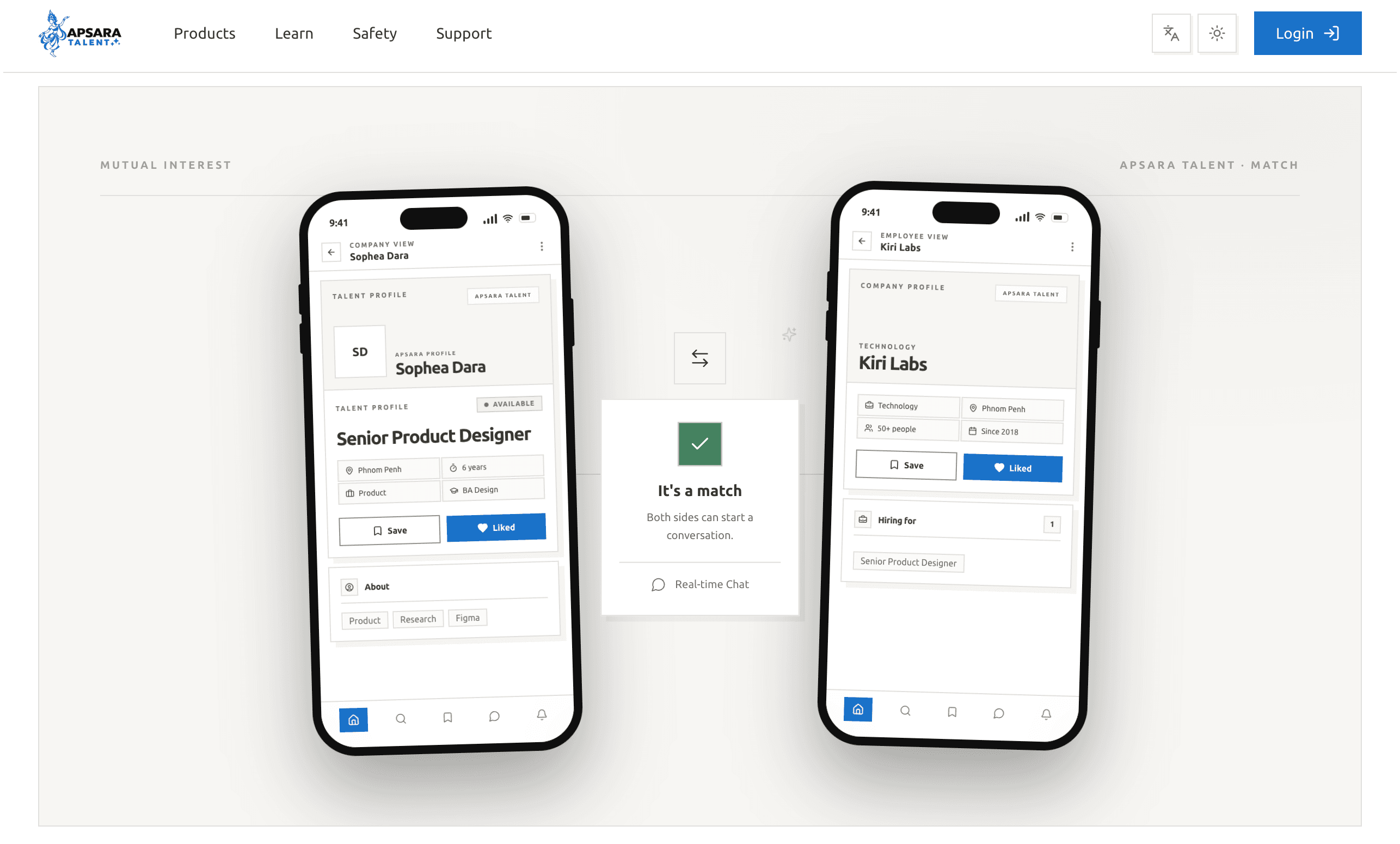
Two loops share one product: profiles and mutual interest that lead to a match, and a job pipeline from application to hire. A NestJS gateway fronts six internal services over TCP on one PostgreSQL schema with pgvector, Redis, and Socket.IO, serving a Next.js web app and a Flutter mobile client. It runs on Railway, Neon, Cloudflare R2, and Vercel, with Prometheus and Grafana watching it and recovery times measured rather than assumed.
Case study
The problem
Apsara Talent has to support two different conversations: candidates and companies finding each other, and a company moving an applicant from application to offer. It needs both without blurring them — and it has to match people on meaning rather than exact keywords, because “Full Stack Development” and “Backend Developer” describe overlapping people.
Key decisions
Matching on meaning, not keywords
Recommendations combine weighted signals — career-scope similarity, skill overlap, and job-title similarity — with the semantic parts scored by pgvector cosine distance over an HNSW index, so related roles match even when they share no words.
Trade-off
Not every profile has an embedding yet, so each semantic signal falls back to exact overlap — results stay sensible, just less forgiving, until the vector exists.
Services that share a schema
A gateway and six internal services — auth, users, jobs, chat, resumes, and notifications — talk over NestJS TCP transport and share one PostgreSQL schema and one contracts library.
Trade-off
The deployables are separate but the data is not: a change to a shared entity can touch several services at once, and the project map says so plainly rather than pretending otherwise.
A load gate people can trust
Every push runs a load phase against the readiness endpoint, which fans out to the database, Redis, and all six services. The p95 limit is 500 ms — about three times the worst of three measured runs.
Trade-off
Concurrency was cut from 20 to 5 after runner contention failed a release at 3.3% errors. A flaky gate gets rerun until it passes and stops meaning anything.
Recovery measured, not assumed
Restoring the database from a Neon point-in-time branch is tested weekly and takes 3.7 seconds; rolling a single service back takes about two minutes, with a dry-run rollback planner in CI.
Trade-off
The point-in-time window is one day, so anything noticed later depends on the nightly off-site dump — written down in the runbook rather than discovered during an incident.
Outcome
- verified database restore
- 3.7s
- one-service rollback
- ~2 min
- p95 load gate
- < 500ms
- backend services
- 7
Deployed across Railway, Neon, Cloudflare R2, and Vercel, with Prometheus, Alertmanager, and Grafana watching it and a runbook for the failures that have already happened once. Roughly 1,700 commits across the API, web, and mobile repositories since January 2025.
Inside the product
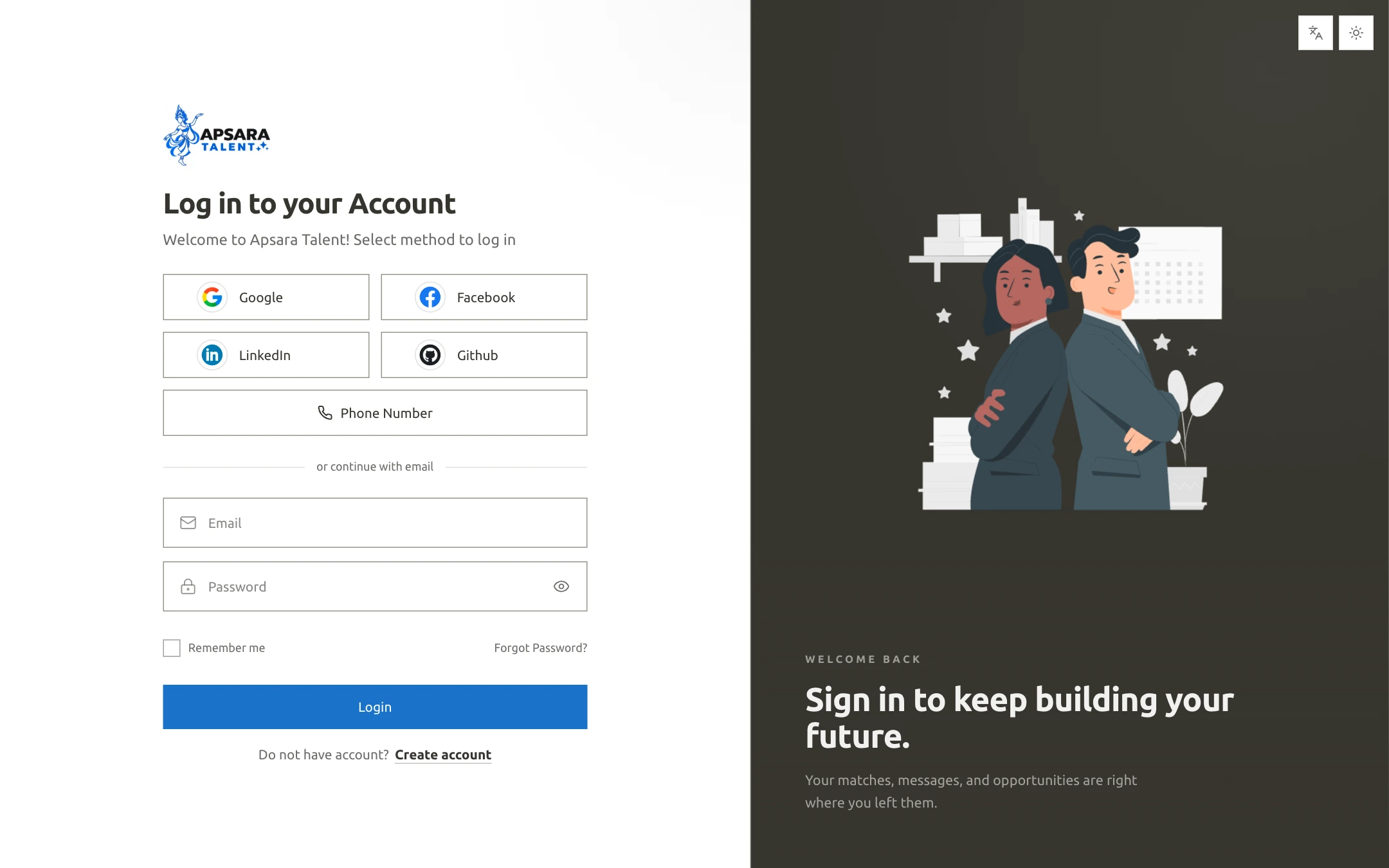
Public sign-in page, captured from the running website.
Product artwork
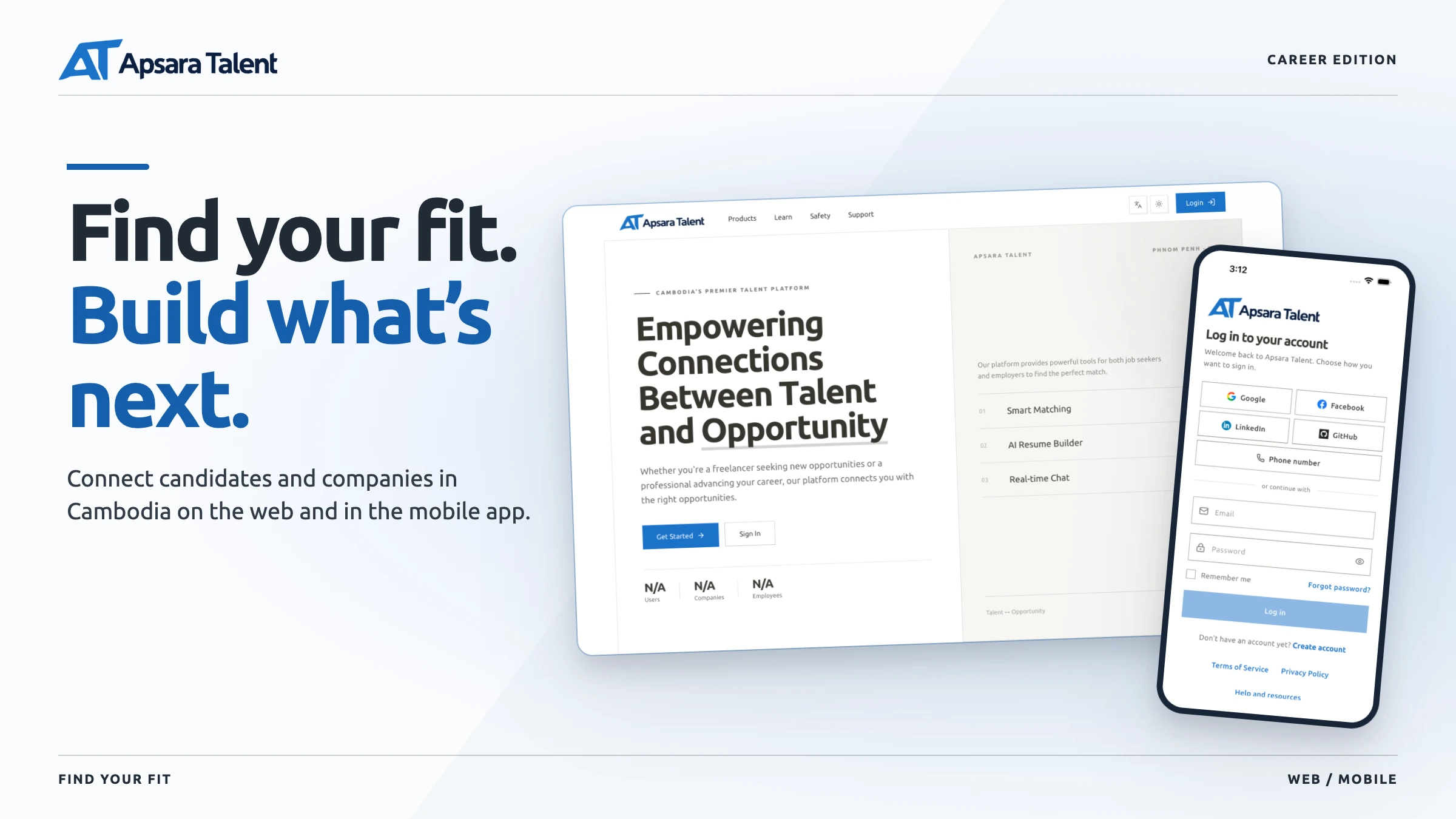
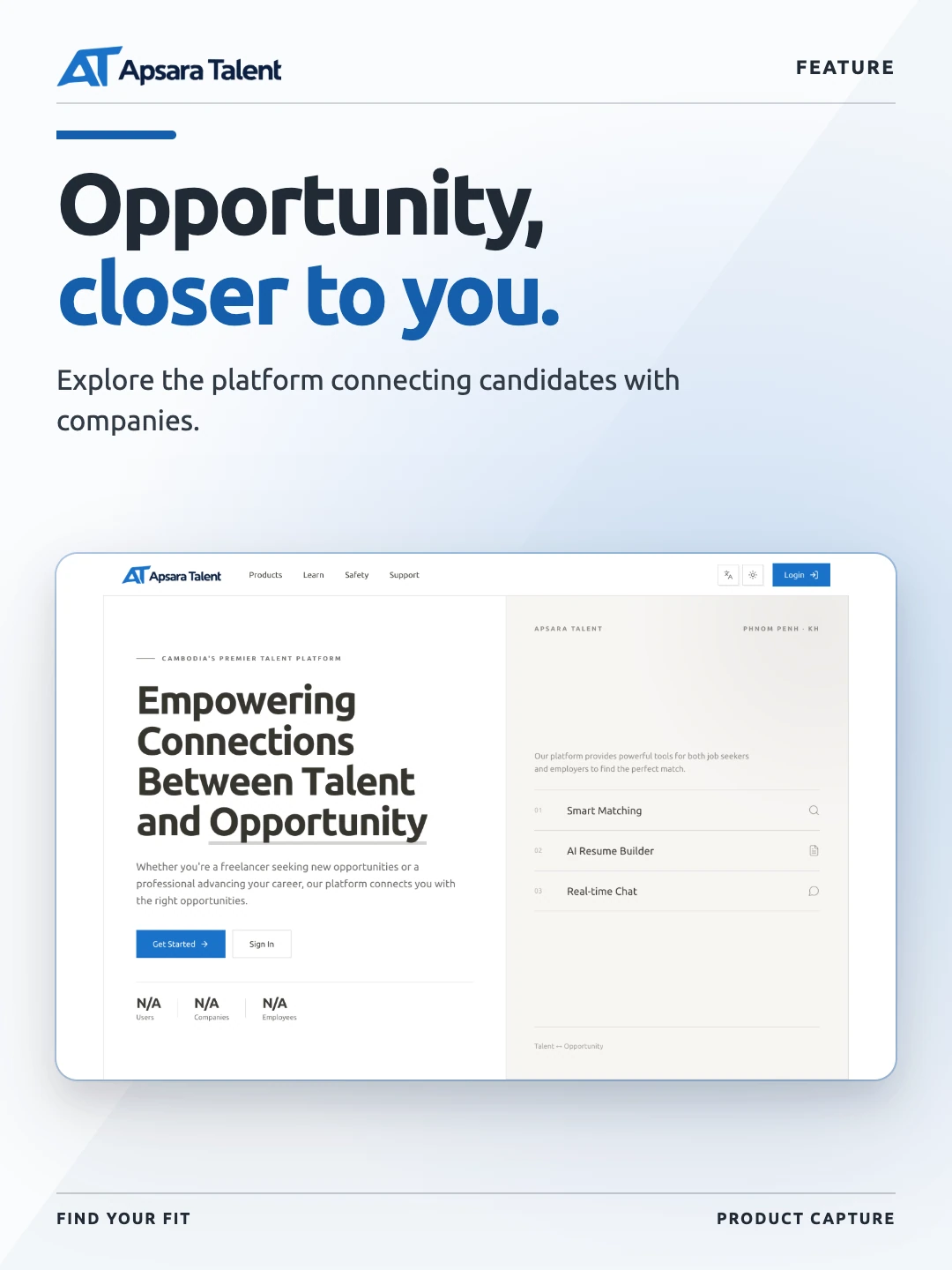
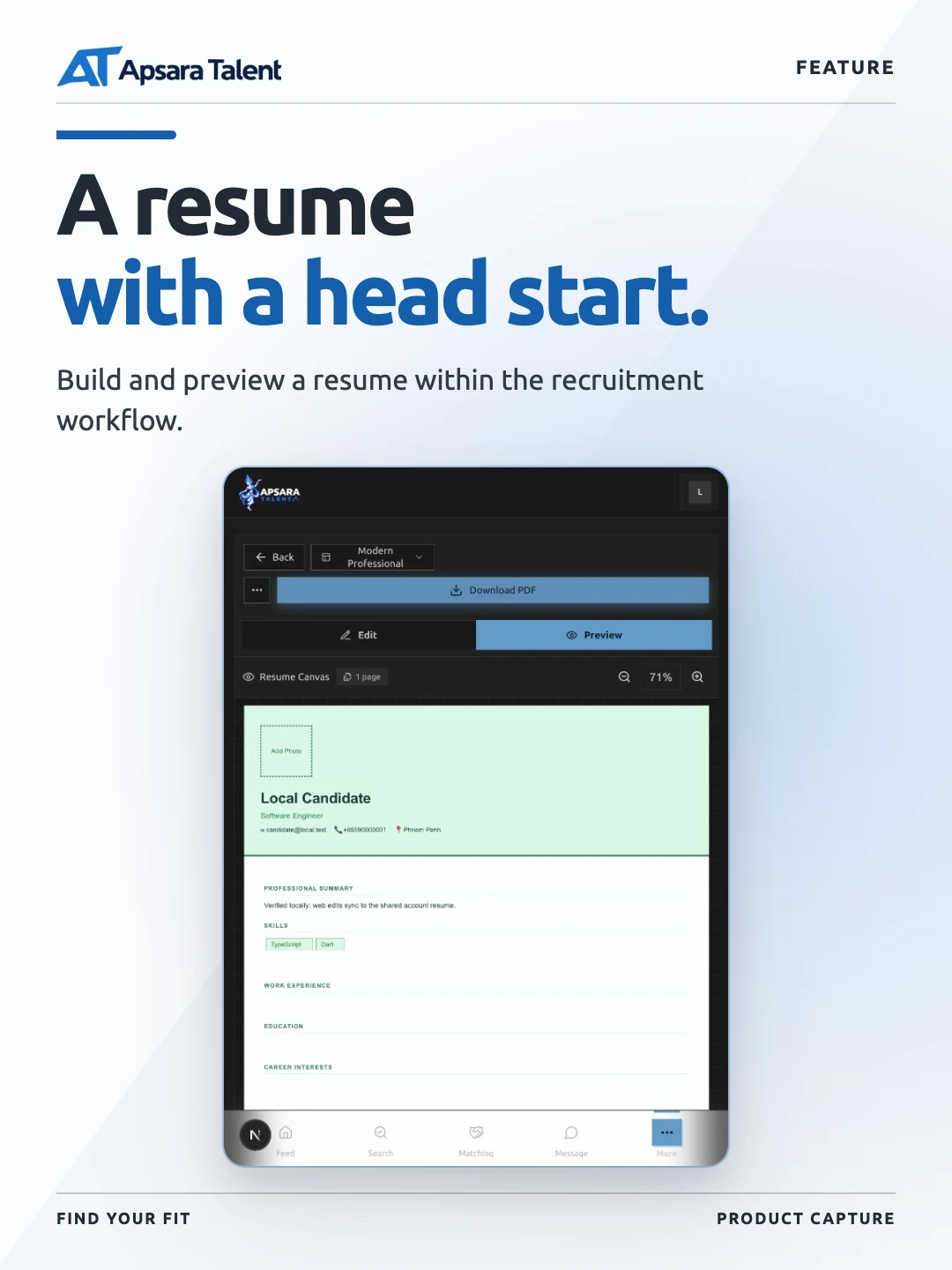
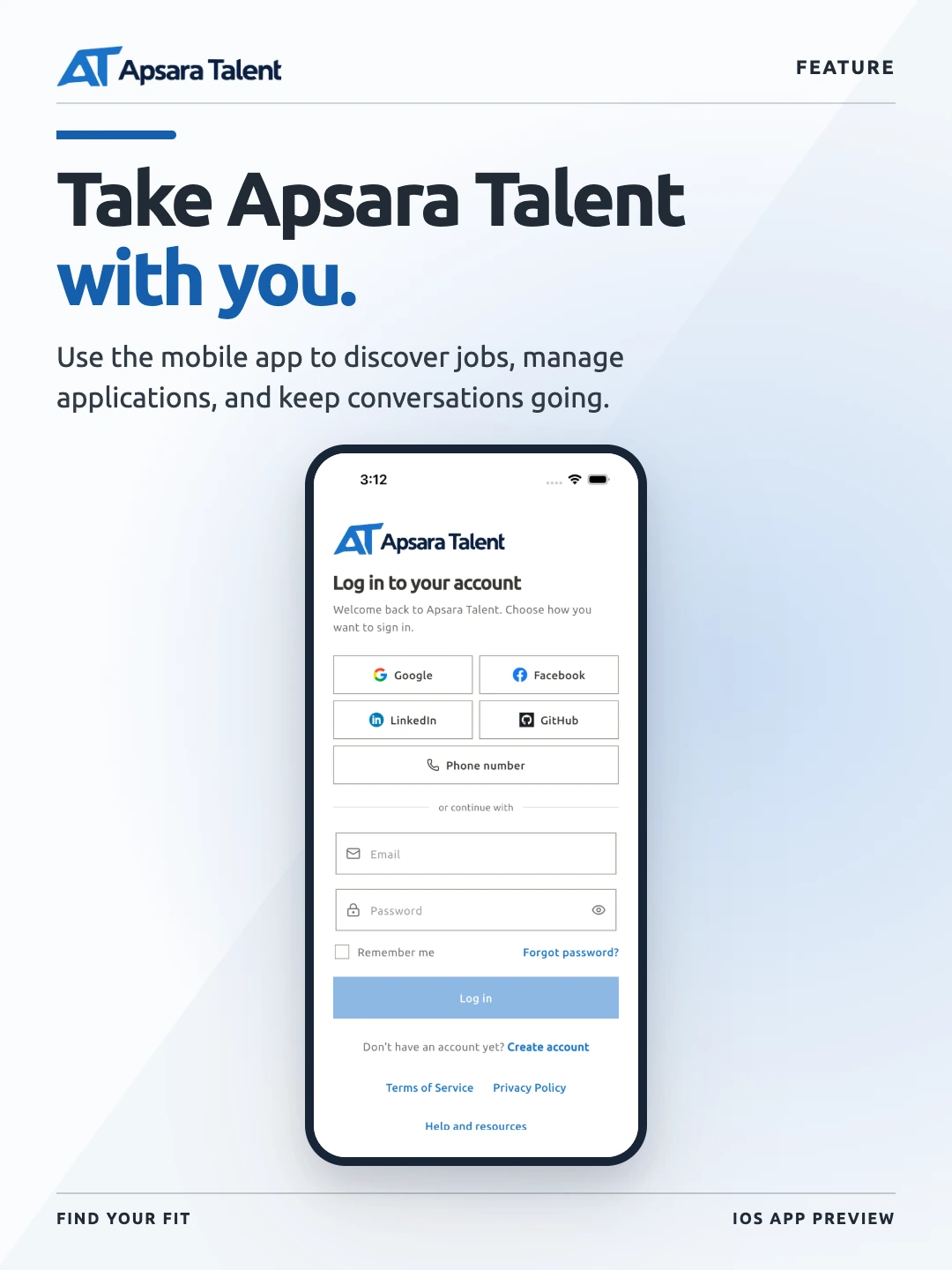
A cover and three feature panels designed around the product’s interface and colors. Select any image to see it in full.
05 / Technologies
Technologies
- TypeScript
- Next.js
- NestJS
- Microservices
- PostgreSQL
- pgvector
06 / Public resources